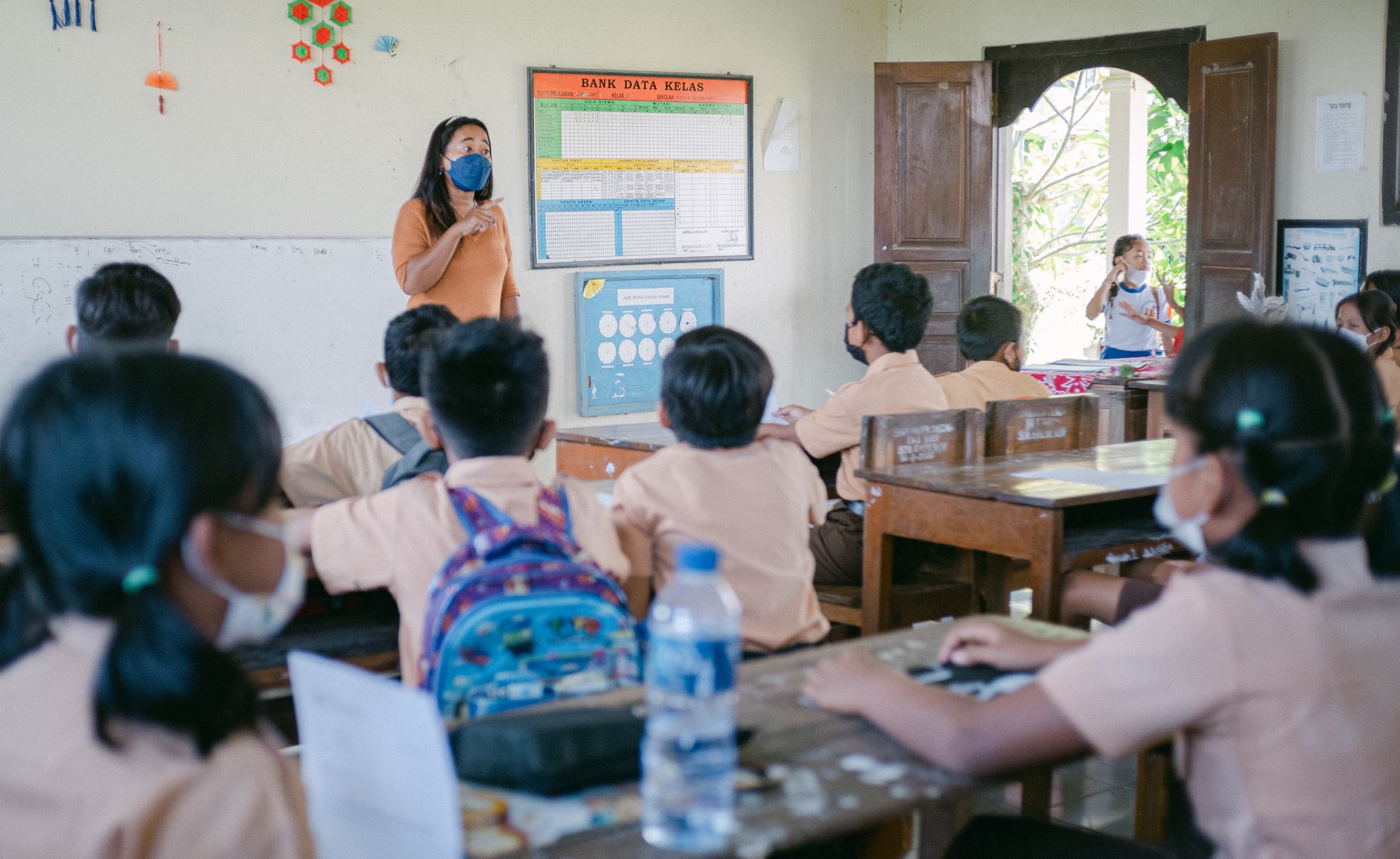
Every single time the bell rang, he flinched.
Not a little. A full-body flinch — shoulders up, head down, hands gripping the edge of his desk like something terrible was about to happen. The other kids didn’t seem to notice. But Ms. Ayu noticed. She noticed every single time.
She’d been teaching at the small village school for six years. She knew her students the way you know a song you’ve heard a hundred times — she could tell when something was off-key. And something was very off-key with Dani.
At first, she told herself it was nothing. Maybe he was just a nervous kid. Maybe he didn’t sleep well. But three weeks into the new term, she started quietly watching him during the transitions — the moments between lessons, when the bell cut through the air like a blade. And every single time, there it was. That flinch. That grip. That look in his eyes like the world had just become a dangerous place.
She pulled him aside after class one afternoon. She didn’t ask him what was wrong. She just sat next to him, looked out the window at the trees in the courtyard, and said, “I see you, Dani. I just want you to know that.”
He didn’t say anything for almost two full minutes.
Then he started to cry.
What came out over the next hour was not what Ms. Ayu expected. It wasn’t a single thing — it was a pattern. Loud, sudden noises at home. A household where tension could turn sharp and fast without warning. A boy who had learned, somewhere deep in his body, that a sudden sound meant brace yourself. The school bell had become a trigger he couldn’t explain and didn’t understand.
Ms. Ayu went home that night and didn’t sleep.
The next morning, she brought the situation — carefully, without naming Dani — to the school’s principal and the small team of teachers. What she described stopped the room cold. Because as she talked, two other teachers exchanged a look. They had noticed things too. Not the bell. Other things. A girl who never ate at lunch. A boy who wore long sleeves through the hottest weeks of the year.
The school brought in a child welfare counselor. Then a second one. Over the following month, they quietly, carefully opened doors for three families — not with judgment, but with support, with resources, with someone finally paying attention.
Dani still flinches sometimes. But less. Ms. Ayu changed her classroom routine — a soft chime instead of the harsh bell, a gentle verbal warning before transitions. It cost her nothing. To Dani, it was everything.
At the end of term, he left a folded piece of paper on her desk. Inside, in careful, kid handwriting, were four words: “You made it safe.”
She keeps it in her desk drawer. She’s looked at it every day since.