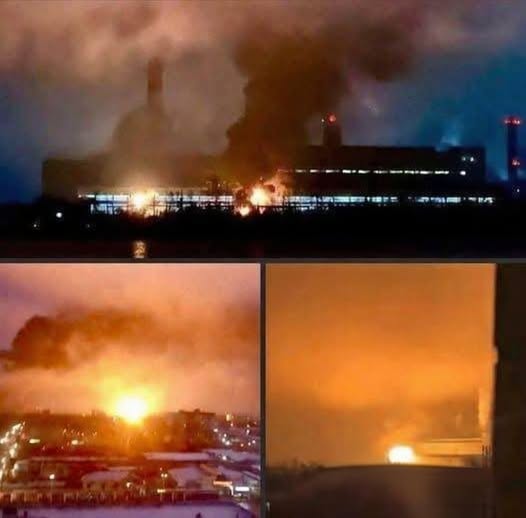
Tensions in the Middle East have sharply escalated after Israel reported a new wave of missile attacks that, according to authorities, were launched from Iran. Within minutes, multiple impacts were recorded, triggering air raid sirens across several مناطق and raising fears of a broader regional conflict—one that could potentially draw in the United States and other global powers.
The situation is both urgent and unstable.
Israeli officials stated that the attacks appeared coordinated, suggesting a deliberate and organized strike rather than an isolated incident. As sirens echoed through cities, residents were forced to act quickly—abandoning daily routines and rushing toward shelters or reinforced spaces. In such moments, preparation and timing become critical, as even seconds can determine survival.
Israel’s missile defense systems were activated almost immediately. Designed to intercept incoming threats, these systems managed to neutralize several projectiles. However, not all could be stopped. Some missiles broke through, striking populated areas and leaving behind scenes of destruction, panic, and confusion.
One of the most severe incidents occurred in Beit Shemesh, a city located west of Jerusalem. There, a ballistic missile caused significant devastation. According to medical authorities, at least nine people were killed and 28 others were injured. Among the wounded, two are in critical condition, two are in moderate condition, and the rest sustained minor injuries.
But beyond the numbers lies a deeply human tragedy.
Authorities reported that the missile struck directly into a synagogue—a place of worship and community gathering. The explosion was so powerful that it caused the building to collapse onto a public shelter located beneath it. At the time of impact, many people had taken refuge there, following emergency protocols meant to protect them.
The shelter, intended as a safe haven, became a deadly trap.
Rescue teams rushed to the scene, facing a complex and emotionally overwhelming situation. Firefighters, paramedics, and volunteers worked tirelessly through debris, carefully removing collapsed structures in search of survivors. Every sound beneath the rubble—a faint voice, a movement—became a signal of hope.
Rescue operations in such conditions are always a race against time.
Amid dust, sirens, and heavy machinery, responders rely on both training and instinct. The priority is clear: save as many lives as possible. But with each passing hour, the urgency intensifies, and the emotional toll grows heavier.
Meanwhile, nearby hospitals quickly mobilized to handle the influx of casualties. Emergency rooms filled rapidly as medical staff worked under pressure to stabilize patients. The most critical cases received immediate attention, while others were treated for injuries ranging from fractures to shock.
In crises like this, healthcare systems are pushed to their limits.
Coordination between emergency responders, hospitals, and authorities becomes essential. Every decision—from triage to resource allocation—can directly impact survival outcomes.
On a national level, Israeli authorities urged residents to remain calm but vigilant. Instructions were clear: stay close to shelters, avoid unnecessary travel, and follow official updates. With uncertainty surrounding the possibility of additional attacks, the population remains in a heightened state of alert.
Fear, in this context, is not irrational.
It is a natural response to an immediate and real threat. However, it also has the potential to disrupt decision-making. That is why officials continue to emphasize the importance of following established safety procedures—systems designed to minimize harm during emergencies.
Internationally, reactions have been swift.
Governments around the world have expressed deep concern, calling for restraint and urging all parties to avoid further escalation. Diplomatic channels are being emphasized as the preferred path forward, with emergency discussions taking place within global institutions focused on peace and security.
The primary concern is escalation.
The Middle East is already a region shaped by complex alliances, historical tensions, and ongoing conflicts. An incident of this magnitude risks triggering a chain reaction, drawing in neighboring countries and potentially expanding into a broader confrontation.
Analysts warn that the coming days will be critical.
The decisions made by both Israel and Iran—as well as the responses from global actors—will determine whether the situation stabilizes or deteriorates further. In high-stakes conflicts like this, communication becomes a decisive factor.
Every signal matters.
Statements from officials, military movements, and diplomatic gestures are all closely monitored and interpreted. In an environment of high tension, even small actions can carry significant consequences.
Yet beyond strategy and geopolitics, the human cost remains at the center.
The nine lives lost in Beit Shemesh are not just statistics. They represent families shattered, futures interrupted, and communities forever changed. The injured now face uncertain recoveries, both physically and emotionally.
Their families must navigate grief, fear, and unanswered questions.
In times like these, communities often come together.
Neighbors support one another, volunteers step forward, and local organizations coordinate relief efforts. These acts of solidarity cannot undo the damage, but they provide strength and connection during moments of crisis.
Community resilience becomes essential.
It does not eliminate pain, but it helps people endure it. It creates a sense of shared purpose, reminding individuals that they are not facing the aftermath alone.
As the world watches, there is a growing awareness of how fragile stability can be.
Conflicts do not remain contained. They evolve, expand, and influence global dynamics in ways that are often unpredictable. That is why diplomatic efforts, even when slow and complex, are so critical.
Dialogue offers an alternative to escalation.
Reopening communication channels, reducing tensions, and seeking negotiated solutions are difficult tasks—but necessary ones. The challenge lies in balancing national security with the urgent need to prevent a wider war.
For now, the situation remains fluid.
Authorities continue to assess damage, provide medical care, and monitor for additional threats. Residents remain on edge, adapting to a reality where conditions can change in an instant.
And as events continue to unfold, one question remains:
Will this crisis be contained—or will it grow into something far larger?
The answer depends on what happens next.
But what is already clear is that the impact extends far beyond a single घटना. It affects individuals, communities, and nations—serving as a stark reminder of the human cost of conflict and the importance of preserving peace whenever possible.