A Sudden Storm, A Lasting Loss: Paraná Community Mourns Young Life Taken by Tornado
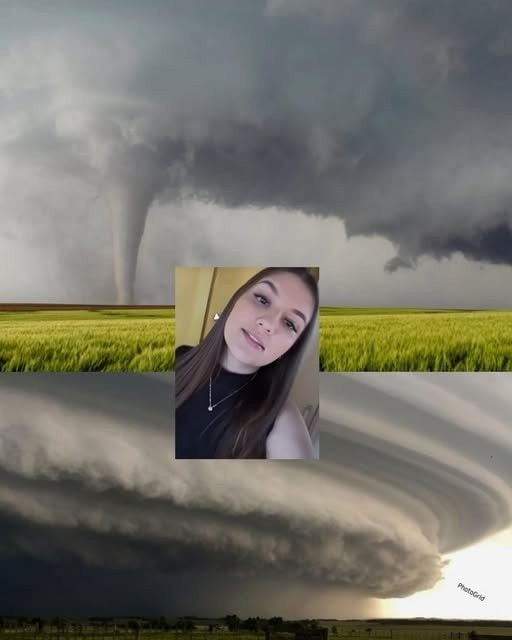
In a quiet town in Paraná, Brazil, life was moving along its usual rhythm—school days, family routines, familiar streets filled with neighbors who knew one another by name. Then, in a matter of minutes, everything changed. A sudden tornado swept through the area with little warning, tearing through homes and streets, leaving behind destruction and disbelief. Among the devastation, one loss has shaken the community to its core: the death of a 14-year-old girl whose life was cut tragically short.
The storm came quickly, as tornadoes often do—unexpected, violent, and unforgiving. Residents recall the sky darkening, the wind rising in intensity, and then the chaos that followed. Roofs were lifted, debris scattered, and the sound of destruction filled the air. In the midst of it all, the young girl was caught in the path of the storm, with no time to react or seek safety.
Emergency services responded as quickly as possible, navigating damaged roads and dangerous conditions to reach those in need. Neighbors also rushed to help, pulling together in the immediate aftermath as they searched for survivors and checked on one another. Despite these efforts, the girl could not be saved. Her death, sudden and incomprehensible, has left a deep wound in a town unaccustomed to such tragedy.
For her family, the loss is immeasurable.
She was the only child of two local school teachers, a family well known and respected within the community. Her parents had dedicated their lives to education, shaping the minds of young people in the very town where they now face their greatest personal loss. Those who know them describe them as caring, committed, and deeply involved in the lives of their students and neighbors.
Now, they are grappling with a grief that words cannot fully capture.
Their daughter was more than a student, more than a name in a report. She was a presence—bright, energetic, and full of life. Friends describe her as someone who naturally brought people together, who offered help without hesitation, and who approached life with a kind of openness that made others feel comfortable and valued.
She had plans, like any teenager. Aspirations that were just beginning to take shape. Interests that reflected both curiosity and compassion. Those who knew her speak of her willingness to listen, her quick smile, and her ability to find joy in everyday moments.
In a small town, these qualities are not easily forgotten.
As news of her death spread, the community responded in a way that reflected both its closeness and its collective grief. Neighbors gathered, not only to process what had happened but to support one another. Conversations turned to memories—shared experiences, small acts of kindness, moments that now carry greater meaning.
Her school became a focal point for remembrance.
Teachers and students organized a memorial, creating a space where grief could be expressed openly. Classmates stood together, some in silence, others sharing stories that highlighted the impact she had on their lives. For many, it was the first time they had faced the loss of someone so close to them, someone who had been part of their daily routine.
The school grounds, once filled with the sounds of lessons and laughter, took on a different tone—one of reflection and quiet solidarity.
Flowers, letters, and candles began to appear at both her home and her school. Each item placed there represented a connection, a memory, a way of saying that she mattered. Handwritten notes spoke of friendship, gratitude, and the difficulty of saying goodbye. These small gestures, collectively, created a space where the community could come together, not just to mourn, but to honor a life that had touched so many.
In the days following the tornado, attention has also turned to the broader impact of the storm.
Authorities are continuing to assess the damage, working to understand the full extent of what occurred. Homes have been damaged, infrastructure affected, and families displaced. Rescue teams remain active, ensuring that all residents are accounted for and that any ongoing risks are addressed.
At the same time, support services are being provided to those affected. This includes not only physical assistance—such as temporary shelter and repairs—but also emotional support. Events like this leave lasting psychological effects, particularly for those who experienced the storm firsthand.
The tragedy has also sparked a wider conversation about preparedness.
Tornadoes are relatively rare in this part of Brazil, but their occurrence has been noted with increasing frequency in recent years. This raises questions about how communities can better prepare for such events—how warning systems can be improved, how residents can be informed more effectively, and how infrastructure can be adapted to reduce risk.
For many in Paraná, the idea of a tornado is still something distant, something associated with other regions or countries. This event has challenged that perception, bringing the reality of such natural phenomena closer to home.
Experts emphasize that while it may not be possible to prevent such events, their impact can be mitigated. Early warning systems, public education, and emergency planning all play a role in reducing harm. Ensuring that residents know how to respond when severe weather strikes can make a critical difference.
In this context, the loss of the young girl becomes part of a larger narrative—one that connects personal tragedy with broader questions of safety and preparedness.
Yet, even as these discussions unfold, the immediate focus remains on the community and its process of healing.
Grief, especially in a close-knit environment, is both individual and collective. Each person experiences it differently, but there is also a shared sense of loss that binds people together. In small towns, where relationships are often interconnected, the absence of one individual can be felt in many ways.
There are empty seats in classrooms, quiet moments where there used to be conversation, and daily routines that now carry a sense of something missing.
For her parents, the journey ahead is one of unimaginable difficulty. The loss of a child reshapes every aspect of life, altering not only the present but also the future that had been envisioned. Support from the community, while deeply meaningful, cannot erase that loss—but it can provide a foundation for coping, for remembering, and for finding a way forward.
The community’s response reflects this understanding.
People are showing up—not just in the immediate aftermath, but in ongoing ways. Offering help, sharing time, listening. These acts, while simple, are essential in the process of healing. They reinforce the idea that no one has to face such loss alone.
As time passes, the intensity of the moment may begin to soften, but the memory will remain.
The story of the young girl—her kindness, her energy, her presence—will continue to be told. In conversations, in classrooms, in the quiet spaces where people reflect on what she meant to them. These stories are a way of keeping her spirit alive, of ensuring that her impact is not defined solely by the circumstances of her death.
They are a reminder of who she was.
At the same time, the event stands as a stark illustration of nature’s unpredictability. Storms do not follow schedules. They do not account for routines or expectations. They arrive with a force that can disrupt lives in an instant.
This reality, while difficult to accept, is part of the broader human experience.
What remains, in its wake, is the response—how individuals and communities come together, how they support one another, and how they find meaning in the midst of loss.
In Paraná, that process has begun.
It is visible in the gatherings, in the memorials, in the quiet determination to remember and to care for one another. It is present in the conversations about preparedness, in the efforts to learn and adapt. And it is carried forward in the memory of a young life that, though brief, left a lasting impression.
The town will heal, slowly and unevenly, as communities do.
But it will not forget.
And in that remembrance, there is both sorrow and strength—a recognition of what has been lost, and a commitment to honoring it in the days to come.