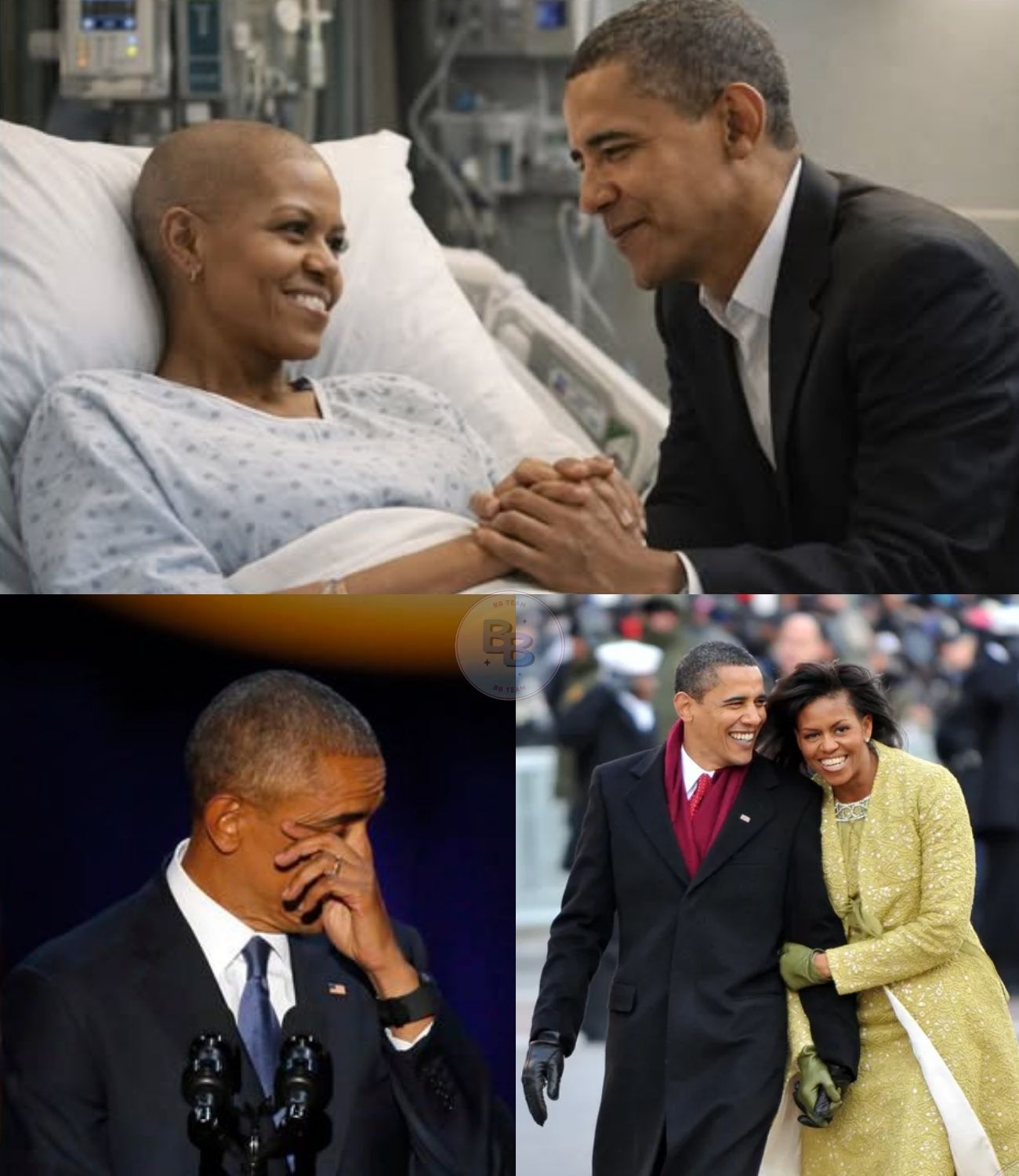
A claim circulating online suggests that former U.S. President Barack Obama became visibly emotional while revealing a serious medical crisis involving his wife, Michelle Obama. The story has rapidly gained traction across social media platforms, drawing strong reactions from users who are understandably concerned about the well-being of a widely admired public figure. The emotional framing of the claim—centered on vulnerability, urgency, and personal struggle—has made it particularly compelling, encouraging rapid sharing and discussion. However, despite its widespread circulation, there is currently no credible or verified evidence to support the claim.
In an age where information travels faster than ever, stories like this highlight both the power and the danger of digital communication. Social media platforms have become central to how people consume news, but they also serve as fertile ground for misinformation. The claim about Michelle Obama appears to follow a familiar pattern: a dramatic headline, emotionally charged language, and a lack of verifiable sources. These elements are often used to capture attention quickly, prompting users to react before critically evaluating the content.
It is important to note that neither Barack Obama nor Michelle Obama has made any public statement confirming such a medical crisis. Additionally, no reputable news organizations—those with established standards of fact-checking and accountability—have reported on this claim. In the absence of confirmation from reliable sources, such stories should be approached with skepticism. The emotional weight of the narrative does not equate to its accuracy.
Michelle Obama, a former First Lady and a globally recognized public figure, has been open about various aspects of her life in recent years. Through her books, interviews, and public appearances, she has discussed topics such as mental health, personal growth, and the challenges of life transitions. Her memoir, Becoming, and her subsequent public engagements have emphasized authenticity and resilience. However, none of these discussions have indicated the presence of a sudden or severe medical emergency as suggested by the circulating claim.
The appeal of such stories often lies in their emotional resonance. People feel connected to public figures, especially those who have played significant roles in cultural or political life. Barack and Michelle Obama, in particular, are widely respected and admired, which makes any news about them inherently attention-grabbing. When a story suggests vulnerability or hardship, it taps into a sense of empathy and concern that can override critical thinking. This is precisely what makes emotionally charged misinformation so effective—and so dangerous.
Misinformation does not always originate from malicious intent. In many cases, it spreads because individuals share content without verifying its accuracy. A user might encounter a post, feel compelled by its message, and share it with friends or followers, believing they are spreading important news. However, this well-intentioned behavior can contribute to the rapid amplification of false or misleading information. Over time, repeated exposure to the same claim can create the illusion of credibility, even when no factual basis exists.
This phenomenon is often referred to as the “illusion of truth” effect. When people see the same information multiple times, they are more likely to believe it, regardless of its source. Social media algorithms, which prioritize engagement, can inadvertently reinforce this effect by promoting content that generates strong reactions. As a result, emotionally charged stories—whether true or false—are more likely to appear in users’ feeds, further increasing their visibility and perceived legitimacy.
The consequences of misinformation extend beyond confusion. In cases involving public figures, false claims can lead to unnecessary चिंता among fans and supporters. They can also invade the privacy of individuals who may find themselves the subject of unfounded speculation. For the Obamas, who have maintained a relatively transparent yet dignified public presence, such rumors can be both intrusive and misleading.
Moreover, the spread of unverified claims can erode trust in information ecosystems as a whole. When people are repeatedly exposed to false stories, it becomes more difficult to distinguish between credible reporting and fabricated content. This erosion of trust can have broader implications, affecting how individuals engage with news, institutions, and each other.
To navigate this landscape, critical thinking is essential. Before accepting or sharing a claim, it is important to consider its source. Is the information coming from a reputable news organization? Are there multiple independent sources confirming the same story? Is there evidence, such as official statements or documented reporting, to support the claim? If the answer to these questions is no, it is wise to approach the information with caution.
Another useful strategy is to examine the language used in the content. Misinformation often relies on sensational or emotionally charged wording designed to provoke a reaction. Phrases that emphasize shock, urgency, or exclusivity—such as “breaking,” “shocking revelation,” or “you won’t believe”—can be indicators that the content is intended to attract attention rather than convey accurate information. In contrast, credible reporting tends to use measured, precise language and provides context and sources.
It is also important to recognize the role of confirmation bias—the tendency to favor information that aligns with existing beliefs or emotions. When a story resonates on a personal level, individuals may be more inclined to accept it without scrutiny. Being aware of this bias can help individuals pause and evaluate information more objectively.
Fact-checking organizations and reputable news outlets play a crucial role in combating misinformation. These entities are dedicated to verifying claims, providing context, and correcting false narratives. Consulting such sources can help clarify whether a widely circulated story has any basis in fact. In the case of the claim about Michelle Obama, the absence of coverage from credible outlets strongly suggests that the story is not grounded in verified information.
Education and digital literacy are also key components in addressing the spread of misinformation. As individuals become more adept at evaluating sources, identifying misleading content, and understanding how information spreads, they are better equipped to make informed decisions about what to বিশ্বাস and share. This, in turn, contributes to a healthier information environment.
The situation surrounding this particular claim serves as a broader reminder of the responsibilities that come with participating in digital spaces. Each user plays a role in shaping the information ecosystem, whether by sharing content, commenting on posts, or simply engaging with stories. By choosing to prioritize accuracy over immediacy, individuals can help reduce the spread of misinformation and promote a more reliable flow of information.
At the same time, it is important to approach such situations with empathy. The emotional reactions elicited by these claims are genuine, reflecting a human capacity for concern and connection. However, empathy should be paired with discernment. Caring about the well-being of others does not require accepting unverified information; in fact, it calls for a commitment to truth and accuracy.
Ultimately, the claim that Barack Obama became emotional while revealing a serious medical crisis involving Michelle Obama remains unsubstantiated. Without confirmation from credible sources, it should not be treated as factual. Instead, it should be viewed as an example of how quickly misinformation can spread and how easily it can capture attention.
In a world where information is abundant and constantly evolving, the ability to think critically is more important than ever. By questioning sources, analyzing language, and seeking verification, individuals can navigate the digital landscape with greater confidence and responsibility. In doing so, they not only protect themselves from misinformation but also contribute to a more informed and trustworthy public discourse.
This moment, while rooted in a specific claim, carries a universal lesson. Truth requires patience. It requires effort. And in an environment where speed often takes precedence over accuracy, choosing to pause and verify becomes an act of integrity.