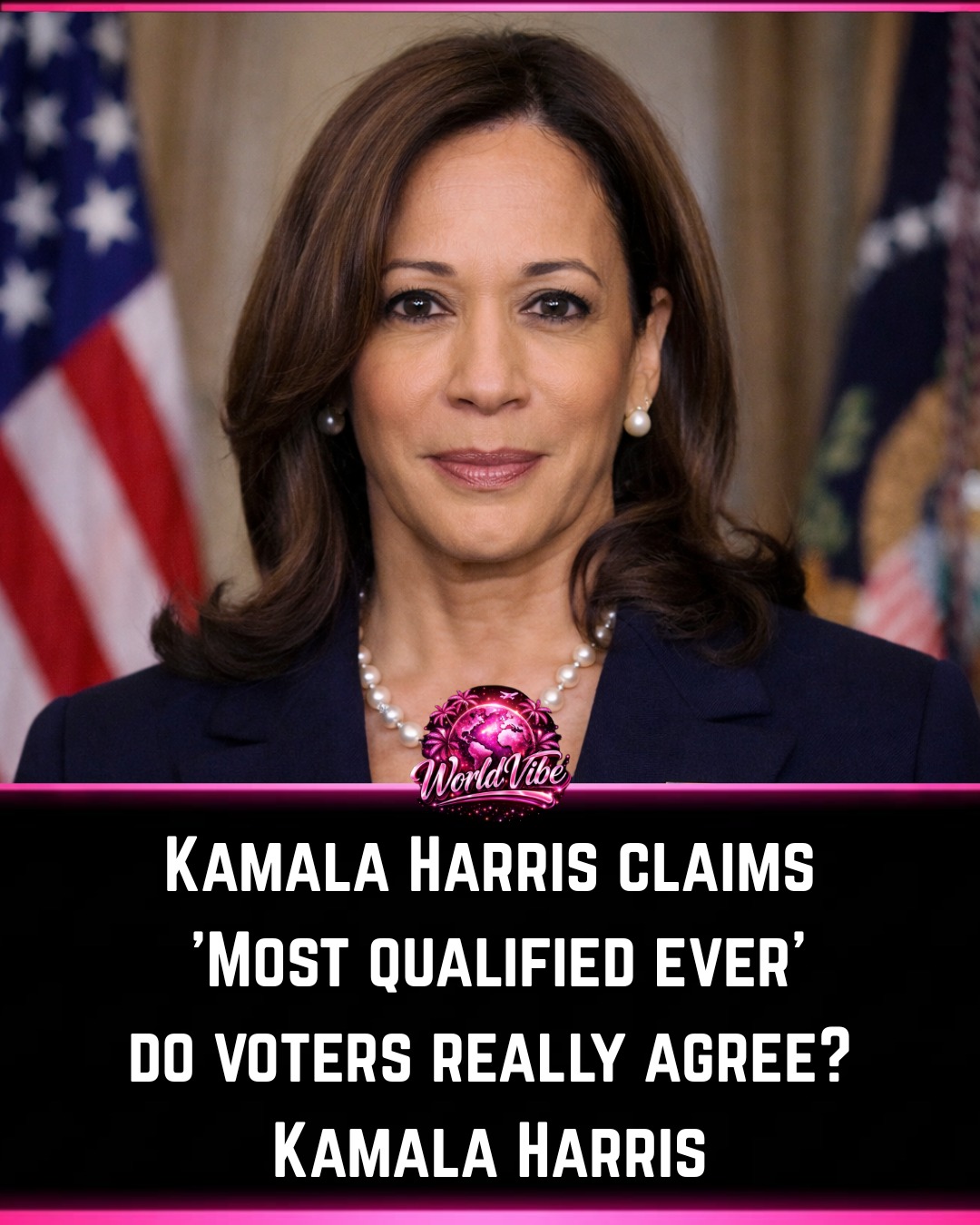
When Kamala Harris recently suggested that some people might view her as the “most qualified” presidential candidate in U.S. history, it immediately sparked conversation across the political spectrum. In modern politics, few phrases generate as much reaction as bold claims about experience and readiness for the highest office. Harris’s remark has reignited a familiar debate: what truly makes someone qualified to be president, and who gets to decide?
Her comment arrives at a time when political messaging is under a microscope and every statement is analyzed for meaning, tone, and potential voter reaction. Supporters see her words as a confident assertion backed by a long résumé in public service. Critics view the phrasing as overly grand and politically risky. As with many moments in American politics, the reaction reveals as much about the public mood as it does about the candidate herself.
A Career Built in Public Service
Harris’s supporters point to a career that spans multiple levels of government. Before becoming vice president, she served as a U.S. senator representing California. Prior to that, she was California’s attorney general and earlier a district attorney. That trajectory gives her experience in law, legislation, and executive decision-making — three areas often cited as relevant preparation for national leadership.
Those who back Harris argue that very few presidential contenders in history have checked as many institutional boxes. They say her experience navigating federal and state systems, managing large offices, and handling national issues as vice president strengthens the case for her qualifications.
In their view, calling herself highly qualified isn’t arrogance — it’s a reflection of a documented record.
Why the Statement Stirred Debate
At the same time, American voters often react cautiously to sweeping self-assessments from politicians. Presidential campaigns frequently balance confidence with relatability. When a candidate uses superlatives like “most qualified,” some voters may hear strength, while others hear overconfidence.
Critics argue that voters prefer to make that judgment themselves. They worry that bold claims can feel self-promotional, especially in a political culture where authenticity and humility are prized by many constituencies.
This tension isn’t new. Past candidates from both parties have faced similar reactions when emphasizing their résumés. Experience can be a selling point, but it can also raise expectations.
The Broader Question: What Is “Qualified”?
The debate ultimately circles back to a bigger question: what does qualification for the presidency actually mean? The Constitution sets minimal requirements — age, citizenship, and residency — but voters apply their own standards.
Some prioritize government experience. Others value private-sector success, outsider status, or leadership style. For some, qualification is about policy knowledge; for others, it’s about communication and vision.
Because there is no single definition, candidates frame their backgrounds in ways that resonate with their base. Harris’s statement can be seen as part of that framing: presenting her experience as a key asset in a competitive political environment.
Political Messaging in a New Era
Modern campaigns operate in a digital landscape where every quote can go viral within minutes. Short clips, headlines, and social media posts often shape perception more than full speeches. A phrase like “most qualified ever” can spread quickly, sometimes without the surrounding context.
Strategists know this. Messaging today is crafted to stand out in a crowded media environment. Bold statements can energize supporters and draw attention, though they also invite scrutiny.
For Harris, the remark keeps the focus on her credentials — something her campaign has long emphasized. Whether that emphasis resonates broadly depends on how voters weigh experience against other qualities.
Supporters vs. Skeptics
Among Democrats, many view Harris’s background as a strength. They highlight her role in key policy discussions, diplomatic engagements, and legislative ties. To them, her résumé demonstrates readiness for executive leadership.
Skeptics, including some independents and Republicans, question whether length of service alone equals effectiveness. They argue that voters look at outcomes, policy positions, and leadership style alongside titles held.
This divide reflects the broader polarization in U.S. politics, where the same fact can be interpreted differently depending on perspective.
Historical Perspective
American history shows that “most qualified” is a subjective label. Some presidents entered office with deep government experience, while others came from outside traditional political paths. Voters have, at different times, favored both profiles.
That historical variability makes claims of unmatched qualification inherently debatable. Each era defines leadership needs differently based on economic conditions, global affairs, and domestic priorities.
Looking Toward 2026
As the 2026 election cycle approaches, discussions about credentials will likely intensify. Voters often compare candidates not only on policy but also on perceived preparedness for crises and decision-making under pressure.
Harris’s comment places her experience front and center in that conversation. Whether it strengthens her standing or invites more critique will depend on how the electorate responds over time.
The Takeaway
The reaction to Harris’s remark highlights how carefully calibrated political language must be. Confidence can inspire supporters, but it can also provoke skepticism. In the end, voters weigh claims against their own expectations and priorities.
One thing is certain: debates over qualification are really debates over leadership. And in a democracy, the final judgment always rests with the voters.
As campaigns ramp up and messages sharpen, moments like this offer a glimpse into how candidates position themselves — and how the public measures readiness for the presidency.