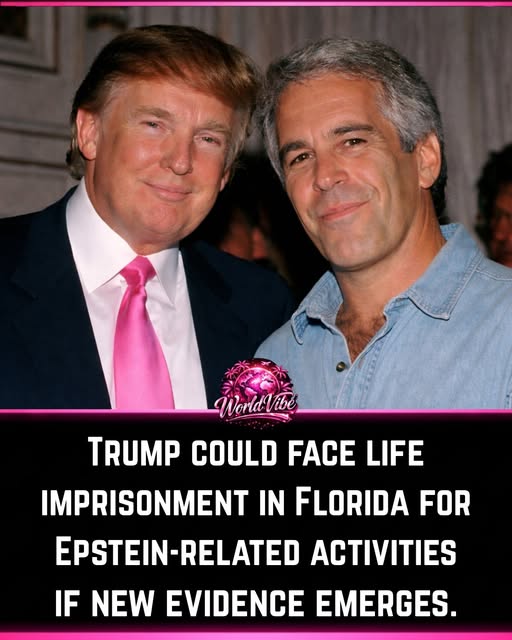
The release and resurfacing of documents connected to Jeffrey Epstein have once again ignited public debate, drawing attention to past investigations, high-profile associations, and the complexities of interpreting legal records in the court of public opinion. Among the names discussed in online conversations is Donald Trump, prompting renewed scrutiny, strong reactions, and a flood of commentary across social media and news platforms.
As with previous waves of Epstein-related disclosures, the latest round has produced more questions than clear conclusions for many observers. Legal experts consistently stress an important distinction: being named in documents connected to a case does not automatically imply wrongdoing. Court filings, depositions, and investigative materials often include references to a wide range of individuals for context, testimony, or background — not as determinations of guilt.
Still, the Epstein case remains one of the most closely watched scandals in modern history, largely because of the number of influential figures who crossed paths with him socially, professionally, or politically. That reality keeps public interest high whenever new material emerges.
Why Epstein-Related Releases Always Make Headlines
The Epstein investigation has long drawn attention because it sits at the intersection of wealth, power, and alleged criminal behavior. His connections spanned business leaders, politicians, academics, and celebrities. As a result, any new disclosure tends to generate widespread curiosity and speculation.
For many members of the public, these document releases represent a search for accountability. People want to know who knew what, when, and whether justice was fully served. That desire for transparency is understandable given the seriousness of the allegations tied to Epstein’s activities.
At the same time, legal professionals caution against treating raw documents like verdicts. Court materials can contain unverified claims, second-hand statements, or references that were never proven in court. Context matters — and context is often what gets lost when excerpts circulate online.
Trump’s Past Public Connection to Epstein
Donald Trump and Jeffrey Epstein were known to have moved in some of the same social circles in the 1990s and early 2000s, a fact documented in photographs and media reports from that era. Trump has publicly stated in the past that he later distanced himself from Epstein and was not a part of his inner circle.
It is also on record that Trump, years ago, reportedly barred Epstein from his Mar-a-Lago club after a dispute. Supporters point to this as evidence of separation, while critics argue that any past association deserves scrutiny. These differing interpretations are part of why the topic remains politically charged.
Importantly, no court has found Trump criminally liable in relation to Epstein’s offenses. That legal reality is a key anchor in discussions that can otherwise drift into speculation.
The Social Media Factor
In today’s digital environment, information spreads at lightning speed. A single screenshot or partial quote can go viral before full context is available. Algorithms tend to amplify emotionally charged content, which can blur the line between verified facts and interpretation.
This dynamic often turns legal documents into social media battlegrounds. Supporters and critics may highlight different parts of the same file to reinforce their existing views. The result is less a legal discussion and more a political or cultural one.
Experts frequently advise the public to rely on full document reviews, reputable reporting, and official court findings rather than fragmented posts.
Broader Questions About Transparency
Beyond any single individual, the continued attention to Epstein-related records reflects a larger societal demand for transparency in cases involving powerful figures. Many people feel that high-profile individuals should be held to the same standards as anyone else under the law.
This perspective fuels ongoing interest in document releases, even years after Epstein’s death. The public conversation is as much about trust in institutions as it is about specific names.
Legal Reality vs Public Perception
One of the biggest challenges in cases like this is the gap between legal standards and public opinion. In court, allegations must be backed by evidence and meet strict thresholds. In public discourse, suspicion alone can shape narratives.
That difference is why attorneys and analysts emphasize caution. A document mentioning someone is not the same as a charge, and a charge is not the same as a conviction. Those distinctions are foundational to the legal system.
Why This Story Keeps Returning
The Epstein case continues to resurface because it touches on themes people care deeply about: justice, power, and the protection of the vulnerable. Whenever new materials appear, they reopen conversations that many feel were never fully resolved.
For some, these disclosures are about accountability. For others, they are about political implications. And for many, they are about understanding how such a case unfolded in the first place.
The Takeaway
The renewed focus on Epstein-related documents involving well-known figures like Donald Trump shows how enduring this case is in the public mind. It also highlights the importance of careful interpretation, verified facts, and due process.
As more information is reviewed and discussed, the most responsible approach is to separate confirmed findings from speculation. Legal matters unfold in courtrooms, not comment sections.
One thing is certain: whenever Epstein-related records surface, they reignite debates about transparency, justice, and the responsibilities of powerful individuals. And those debates are unlikely to fade anytime soon.