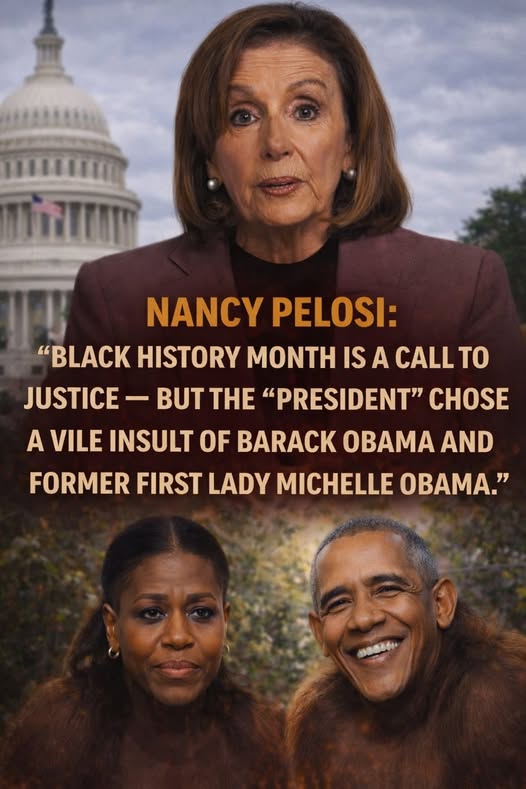
Every February, Black History Month invites Americans to reflect on the history, achievements, and lived experiences of Black Americans. It is a time for education, commemoration, and dialogue about both progress and persistent inequality. Yet, in today’s polarized political climate, even moments meant for reflection can become part of larger partisan debates.
Recent public statements from prominent political leaders have once again raised questions about how Black History Month is observed in the political sphere, and whether leaders should treat it primarily as a cultural commemoration, a call to policy action, or a platform for broader political messaging. The reactions highlight a deeper issue in American public life: where to draw the line between principled expression and political rhetoric.
The Purpose of Black History Month
Black History Month began as “Negro History Week” in 1926, founded by historian Carter G. Woodson. His goal was to ensure that the contributions of Black Americans—often overlooked or minimized in mainstream histories—were recognized and studied. Over time, the observance expanded to a full month and gained federal recognition in 1976.
At its core, Black History Month is about education and remembrance. Schools, museums, and community organizations use the month to spotlight figures from civil rights leaders to artists, scientists, and local pioneers. For many Americans, it is also a time to reflect on the legacy of slavery, segregation, and the ongoing pursuit of racial justice.
Because these topics intersect with public policy—voting rights, criminal justice reform, education access—Black History Month inevitably overlaps with politics. The challenge is how that overlap is handled.
When Commemoration Meets Politics
Political leaders often issue proclamations, host events, or give speeches during Black History Month. These gestures can be symbolic, but they can also signal policy priorities. For example, an administration might highlight funding for historically Black colleges and universities (HBCUs), criminal justice reforms, or economic initiatives aimed at reducing disparities.
However, in a polarized environment, even symbolic gestures are scrutinized. Supporters may see a leader’s message as a meaningful acknowledgment of history and commitment to equity. Critics may view the same message as performative or politically motivated.
When disagreements arise—especially if they involve sharp language or personal criticism—the focus can shift away from history and toward controversy. That shift is what many observers worry about: the risk that the educational purpose of the month gets overshadowed by partisan conflict.
The Role of Rhetoric in Leadership
Rhetoric is an unavoidable part of politics. Leaders use words to inspire, persuade, and distinguish themselves from opponents. Strong language can energize supporters and draw attention to issues. But it can also deepen divisions or distract from substantive policy discussions.
In the context of Black History Month, rhetoric carries particular weight. Discussions about race and history are deeply personal for many Americans. Statements that seem dismissive, overly combative, or politically charged can feel out of step with the reflective spirit many associate with the month.
On the other hand, some argue that honest conversations about racial inequality are inherently political and cannot be separated from debate. From this perspective, avoiding controversy altogether might mean avoiding necessary discussions about policy and justice.
Public Expectations of Leaders
Surveys over the years have shown that Americans hold mixed expectations. Many want leaders to acknowledge historical injustices and support policies that promote fairness. At the same time, there is fatigue with constant political conflict, and some citizens prefer moments of national observance to be less partisan.
This creates a narrow path for leaders. If they speak too cautiously, they may be accused of offering empty symbolism. If they speak too forcefully, they may be accused of politicizing the moment. Navigating that balance requires awareness of audience, tone, and context.
Media and Social Media Dynamics
Modern media ecosystems amplify political disagreements. A single quote or clip can circulate widely, sometimes without full context. Social media platforms, driven by engagement algorithms, tend to reward emotionally charged content. As a result, controversy can spread faster than careful discussion.
This dynamic affects how Black History Month conversations are perceived. A nuanced policy speech may receive less attention than a sharp exchange between political figures. Over time, this can shape public perception, making it seem as though conflict defines the observance more than commemoration does.
Media literacy plays a role here. Audiences benefit from checking original sources, watching full remarks, and distinguishing between opinion commentary and factual reporting.
Reflection vs. Action
Another dimension of the debate is whether Black History Month should focus more on reflection or on action. Reflection emphasizes learning about history, honoring contributions, and promoting cultural understanding. Action emphasizes policy changes, institutional reform, and measurable progress.
In reality, the two are connected. Reflection can inform action, and action can give meaning to reflection. The tension arises when political messaging appears to prioritize partisan advantage over either genuine reflection or constructive policy.
A Path Forward
For Black History Month to fulfill its purpose, many educators and community leaders emphasize local engagement—school programs, community dialogues, historical exhibits, and cultural events. These grassroots efforts often continue regardless of national political debates.
For political leaders, a constructive approach may include:
- Grounding statements in historical facts
- Highlighting bipartisan achievements where possible
- Connecting rhetoric to concrete policy goals
- Maintaining a tone of respect during a commemorative period
Such approaches do not eliminate disagreement, but they can reduce the sense that the month is merely another battleground in partisan politics.
Conclusion
Black History Month occupies a unique place in American public life. It is both a celebration of achievement and a reminder of unfinished work. In a divided political climate, leaders’ words during this month carry extra significance.
The question of “respect or rhetoric” is not easily resolved. Democratic societies depend on open debate, but they also benefit from moments of shared reflection. Ultimately, the impact of Black History Month may depend less on political exchanges in Washington and more on how communities, schools, and families choose to engage with history and with one another.
If the month succeeds in sparking learning, empathy, and constructive dialogue, it fulfills the vision of its founder—regardless of the political noise surrounding it.