In the age of viral clips and hyper-charged commentary, the intersection of faith and politics continues to generate some of the most passionate reactions in American public life. Moments when political figures invoke religious themes—especially on major media platforms—often resonate far beyond a single broadcast, feeding debates about identity, values, and the proper boundaries between personal belief and public policy.
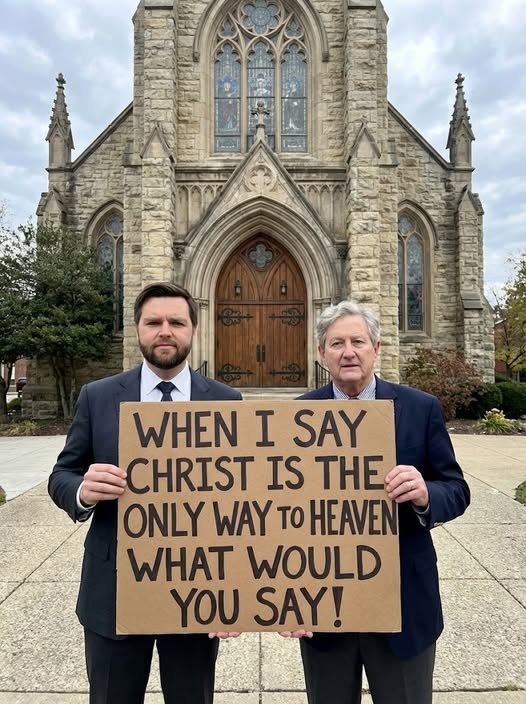
Recent highly dramatized commentary online has framed a hypothetical prime-time exchange involving prominent conservative politicians and religious declarations as a kind of cultural “showdown.” While the language circulating on social media can be explosive and theatrical, the underlying issues it points to are longstanding: How should leaders talk about religion? What role does faith play in political identity? And how do media dynamics amplify these conversations?
This article looks beyond the sensational tone to explore the deeper themes at work when religion and politics collide in the spotlight.
The Long History of Faith in American Politics
Religion has always had a visible presence in American political life. From the civil rights movement led by clergy to modern debates over social policy, faith traditions have shaped moral frameworks and voter priorities. Many politicians speak openly about their beliefs, seeing them as part of their personal story and value system.
At the same time, the U.S. constitutional framework emphasizes religious freedom and prohibits the establishment of a state religion. This creates a balancing act: leaders can express faith, but they govern a religiously diverse population. As a result, religious rhetoric in politics often sparks both support and concern.
Supporters may feel such language reflects moral clarity and cultural heritage. Critics may worry it risks excluding those of different beliefs or none at all. Both reactions stem from the same reality—religion is deeply personal yet publicly consequential.
Media Amplification in the Digital Era
What has changed in recent decades is not the presence of religion in politics, but the speed and scale at which messages spread. A single phrase, slogan, or clip can circulate across platforms within minutes, often detached from its original context.
Modern political communication frequently rewards intensity. Dramatic phrasing, bold declarations, and emotionally charged language travel further online than nuanced discussion. As a result, some commentary adopts the style of spectacle—framing political disagreements as epic battles or moral crusades.
This doesn’t necessarily reflect how policy is made behind the scenes, but it does shape public perception. When audiences encounter politics as entertainment, the line between analysis and performance can blur.
Why Religious Language Resonates
Religious references carry symbolic power. For many voters, faith is tied to community, tradition, and ethical guidance. When leaders speak in spiritual terms, they may be signaling shared values or cultural alignment.
However, the United States is religiously pluralistic. Christians, Jews, Muslims, Hindus, Buddhists, atheists, and others all participate in civic life. Because of this diversity, explicitly religious political messaging can unite some audiences while distancing others.
Scholars of political communication note that voters often interpret religious language through their own experiences. To some, it sounds like conviction; to others, it can sound like exclusion. The same words can inspire or unsettle depending on who is listening.
The Difference Between Rhetoric and Policy
It is also important to distinguish rhetoric from governance. A fiery statement on television or social media does not automatically translate into legislation. Laws and policies must pass through institutional processes, negotiation, and legal constraints.
Public debates sometimes focus more on symbolic language than on concrete proposals. While rhetoric influences culture and elections, the day-to-day work of government typically involves pragmatic compromise.
Understanding this distinction can help citizens evaluate political messages more calmly. Not every dramatic statement signals a dramatic policy shift.
The Role of Citizens and Media Literacy
In a media environment saturated with opinion, citizens play a key role in shaping discourse. Media literacy—checking sources, seeking full context, and recognizing emotional framing—can reduce polarization.
When encountering highly charged political content, useful questions include:
- Is this reporting or commentary?
- Is the language descriptive or persuasive?
- Are claims supported by verifiable facts?
- Who benefits from this framing?
These questions do not require cynicism, only curiosity. A healthy democracy depends on informed voters who can separate spectacle from substance.
A Broader Cultural Conversation
Ultimately, moments like these reflect a larger cultural dialogue about identity and values in a diverse society. Some Americans want public life to reflect traditional religious language; others prefer a more secular tone in official spaces. Most citizens likely fall somewhere in between, valuing both freedom of belief and mutual respect.
Political leaders, for their part, navigate constituencies with different expectations. Some voters reward overt expressions of faith; others prioritize pluralism and neutrality. The tension between these preferences is not new—it is part of the country’s evolving story.
Conclusion
Sensational political rhetoric may dominate headlines and hashtags, but the underlying questions are enduring ones. How should personal faith influence public leadership? How can a diverse nation respect belief without imposing it? And how can media ecosystems encourage understanding rather than division?
The answers are rarely found in viral soundbites. They emerge through dialogue, civic engagement, and a willingness to recognize complexity. In the end, the health of public discourse depends less on the volume of our declarations and more on the quality of our conversations.