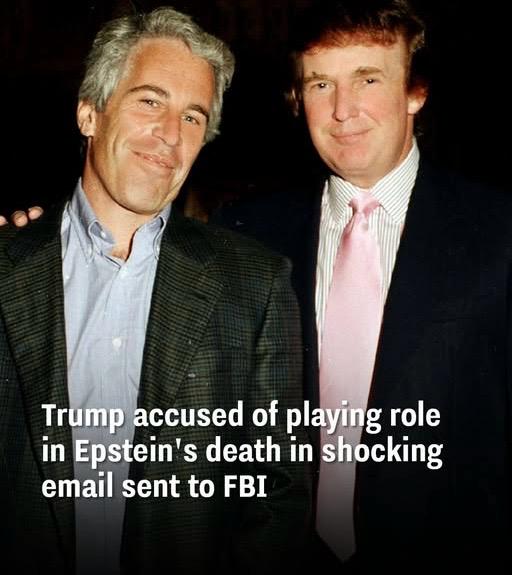
The death of financier Jeffrey Epstein in a New York jail cell in August 2019 remains one of the most scrutinized and debated events in recent American criminal justice history. Officially ruled a suicide by the New York City medical examiner, Epstein’s death nonetheless ignited a wave of speculation, suspicion, and conspiracy theories that continue to circulate years later. Among the many claims that have surfaced are allegations sent in tips and emails to authorities accusing various powerful figures of involvement. These claims, however, exist in a complex landscape where rumor, politics, media incentives, and public distrust intersect.
This article examines how such allegations emerge, how they are handled by law enforcement, and what is known—based on verified information—about Epstein’s death.
The Context of Epstein’s Case
Jeffrey Epstein was awaiting trial on federal sex trafficking charges involving underage girls when he died in custody at the Metropolitan Correctional Center (MCC) in Manhattan. Given the high-profile nature of the case and Epstein’s connections to wealthy and influential individuals in politics, business, and entertainment, public interest was intense. Many people hoped a trial would reveal more about his network and possible enablers.
When Epstein was found dead in his cell on August 10, 2019, the shock was immediate. Questions arose about jail procedures, monitoring failures, and how a high-risk inmate could die while in federal custody. Subsequent investigations found serious lapses: guards reportedly failed to perform required checks, and some security cameras were not functioning properly. These failures fueled skepticism and created fertile ground for alternative explanations.
Official Findings vs. Public Suspicion
The New York City Office of the Chief Medical Examiner concluded that Epstein died by suicide by hanging. The U.S. Department of Justice’s inspector general later released reports criticizing the Bureau of Prisons for negligence and procedural failures but did not find evidence of homicide or a coordinated plot to kill Epstein.
Despite these findings, a portion of the public remained unconvinced. Polls conducted in the years following his death suggested that many Americans suspected foul play. This skepticism reflects a broader erosion of trust in institutions, especially when cases involve powerful figures and opaque circumstances.
The Role of Tips, Emails, and Accusations
In high-profile cases, law enforcement agencies such as the FBI routinely receive large volumes of tips. These can range from credible leads to misunderstandings, speculation, or politically motivated claims. Sending a tip or email to the FBI accusing someone of wrongdoing does not mean the claim has merit; it simply enters a system where agents assess credibility, evidence, and relevance.
In the Epstein case, numerous accusations and theories have circulated online and reportedly been sent to authorities. Some target well-known public figures. However, an accusation alone—especially one without supporting evidence—does not establish facts. Law enforcement evaluates such claims against available evidence, witness testimony, forensic results, and other intelligence.
It is important to distinguish between an allegation being made and an allegation being substantiated. The former is common in sensational cases; the latter is what determines legal or historical truth.
Why Conspiracy Theories Flourish
Several factors help conspiracy theories gain traction in cases like Epstein’s:
- High Stakes and High Profiles
When a case involves wealthy or politically connected individuals, people may suspect cover-ups or hidden motives. - Information Gaps
Early reporting often includes incomplete details. These gaps can be filled by speculation before official investigations conclude. - Social Media Amplification
Platforms reward emotionally charged or shocking content. A dramatic claim can spread faster than a careful, evidence-based explanation. - Distrust in Institutions
Historical examples of institutional wrongdoing make some people more willing to believe that authorities could hide the truth. - Psychological Comfort
For some, believing in a conspiracy provides a sense of order—suggesting events are controlled by powerful actors rather than random failures or human error.
Media Responsibility and Public Literacy
Media outlets and content creators play a significant role in shaping public understanding. Sensational headlines can draw attention but may also blur the line between reporting and speculation. Responsible journalism typically emphasizes what is known, what is alleged, and what remains unproven.
For readers, media literacy is essential. Key questions include:
- What is the source of the claim?
- Is there corroborating evidence?
- Are official investigations cited?
- Is the language careful or sensational?
Distinguishing between verified facts and viral narratives helps maintain a clearer picture of reality.
The Broader Lessons
The Epstein case highlights systemic issues beyond the circumstances of one man’s death. It exposed problems in jail management, the handling of high-risk inmates, and the public’s hunger for transparency in cases involving elites. It also showed how quickly information ecosystems can become saturated with competing narratives.
For democracies, the challenge is balancing openness with accuracy. Authorities must communicate clearly and promptly, while journalists and citizens must remain cautious about claims that lack evidence.
Conclusion
Years after Jeffrey Epstein’s death, the event still resonates in public discourse. While allegations and theories continue to surface—including claims sent to authorities about various public figures—the official investigations to date have found no evidence of a murder plot. The documented failures at the jail point to negligence and systemic problems rather than a coordinated assassination.
Understanding this case requires separating emotion from evidence and recognizing how modern media environments shape perception. Ultimately, the Epstein story is not only about one man or one night in a jail cell; it is about how societies process scandal, power, and uncertainty in the digital age.