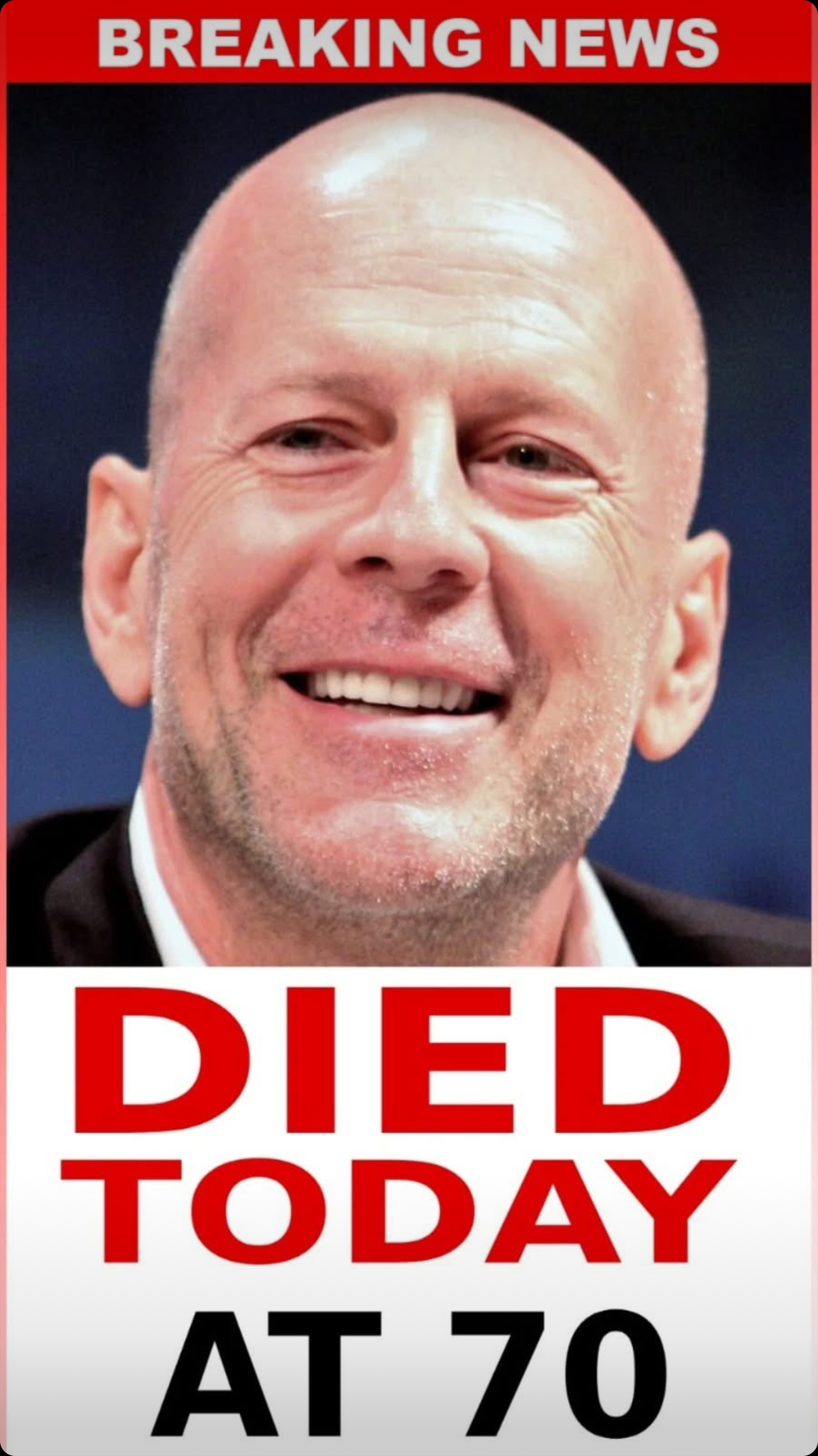
A striking image bearing the words “BREAKING NEWS” and “DIED TODAY AT 70” has recently circulated across social media platforms, showing a smiling portrait of Bruce Willis. The post is alarming, emotionally charged, and designed to stop viewers mid-scroll. But despite its dramatic presentation, the claim is false.
Bruce Willis is alive.
The image is another example of a growing phenomenon in the digital age: fabricated celebrity death announcements engineered for clicks, engagement, and emotional reaction. While such hoaxes are not new, their frequency, sophistication, and reach have increased significantly—raising serious concerns about misinformation, ethics, and the exploitation of public figures.
Why This Claim Feels Believable
The effectiveness of the image lies in its strategic use of context. Bruce Willis publicly stepped away from acting after being diagnosed with aphasia in 2022, and later frontotemporal dementia (FTD) was disclosed by his family in 2023. These announcements were widely covered and deeply emotional for fans around the world.
Because the public already associates Willis with serious health challenges, a false death announcement feels “plausible” to many viewers. The image exploits this emotional groundwork, turning concern into shock.
Adding to its perceived credibility is the familiar visual language of online “breaking news”: bold red banners, capitalized text, a clean portrait, and a simple declarative statement. There is no visible source, no timestamp, and no citation—but in the fast-moving world of social feeds, many users do not pause to ask for those details.
The Reality: What We Actually Know
As of now, there has been no announcement from Bruce Willis’s family, representatives, or any reputable news organization confirming his death. On the contrary, periodic updates shared by his wife, Demi Moore, and his daughters have emphasized gratitude for public support and focused on awareness around dementia—not mourning.
In genuine cases of celebrity deaths, confirmation follows a predictable pattern: official family statements, simultaneous reporting by major outlets, and corroboration across trusted platforms. None of these indicators exist here.
Instead, the image appears to be a fabricated graphic, designed to mimic legitimate news but lacking any verifiable origin.
The Business of Fake Death News
So why do posts like this exist?
The answer is simple: engagement equals money or influence. Sensational false news drives clicks, shares, comments, and emotional reactions—especially outrage and grief. Pages that traffic in such content often monetize attention through ads, political messaging, or algorithmic growth.
Celebrity death hoaxes are particularly effective because they tap into collective memory. Bruce Willis is not just an actor; he is a cultural symbol. From Die Hard to The Sixth Sense, his work spans generations. A false announcement of his death triggers nostalgia, sadness, and urgency—emotions that spread content faster than facts.
Ethical Implications
Beyond misinformation, there is a deeper ethical issue at play. Bruce Willis is a living person dealing with a serious medical condition. His family, friends, and fans already navigate a difficult emotional reality. Publishing or sharing fake death announcements adds unnecessary distress and violates basic human decency.
Such hoaxes also contribute to “compassion fatigue.” When people are repeatedly exposed to false tragic news, they may become less responsive when real tragedies occur. In this way, fake death posts do not just mislead—they erode empathy itself.
A Pattern, Not an Isolated Incident
This is not the first time Bruce Willis has been the subject of false death rumors, nor will it likely be the last. Similar hoaxes have targeted actors, musicians, athletes, and even political figures. The pattern is consistent:
- A recognizable face
- A dramatic headline
- No verifiable source
- Rapid spread before fact-checking
Social platforms struggle to keep up, especially when such posts are shared in private groups or messaging apps where moderation is limited.
How to Spot a Fake Death Announcement
To avoid being misled—or unintentionally spreading misinformation—there are a few simple checks anyone can perform:
- Look for the source: Legitimate news always cites an outlet.
- Search independently: A real death will be reported everywhere, not just in one viral image.
- Check the language: Overly bold, emotional, or simplistic phrasing is a red flag.
- Pause before sharing: Emotional reactions are exactly what these posts are designed to provoke.
The Responsibility of the Audience
While platforms and regulators play a role, individual users are the final gatekeepers of information. Every share amplifies a message, whether true or false. In cases like this, restraint matters.
Choosing not to share an unverified post is not censorship—it is responsibility.
Conclusion
The viral image claiming that Bruce Willis “died today at 70” is false, misleading, and harmful. It exploits public concern over his health, abuses the trust of audiences, and contributes to a wider culture of digital deception.
Bruce Willis remains alive, surrounded by family, and continues to be honored for a career that shaped modern cinema. He deserves respect—not clickbait epitaphs.
In an era where anyone can publish anything, the difference between truth and fiction often comes down to one simple choice: whether we stop, think, and verify—or scroll, react, and share.