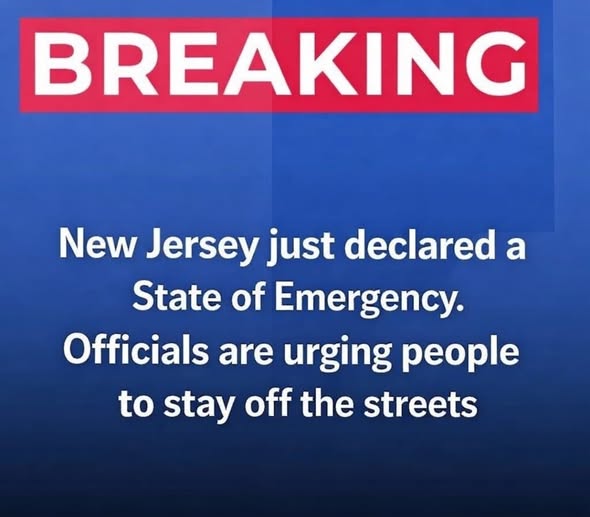
When the words “State of Emergency” appear on people’s screens, fear spreads quickly. The image circulating online stating that “New Jersey just declared a State of Emergency” and urging residents to stay off the streets has left many wondering whether something catastrophic is unfolding. In reality, these declarations are serious, but they are also strategic tools used by the state to protect lives during dangerous conditions.
A State of Emergency allows the governor to activate emergency powers, mobilize response teams, and streamline government action during times of crisis. This can include extreme weather, flooding, infrastructure failures, or shortages of critical resources. In New Jersey, these declarations are used when conditions become hazardous enough that normal operations cannot keep people safe.
In recent months, New Jersey has experienced repeated severe weather events. Powerful winter storms, freezing rain, flooding, and nor’easters have created dangerous road conditions, power outages, and transportation disruptions. These situations prompted state officials to take preventive action before injuries and fatalities occurred.
When the state urges people to stay off the streets, it is not meant to scare — it is meant to protect. Icy roads, limited visibility, and stalled vehicles can quickly overwhelm emergency services. Every car accident, stranded driver, or blocked road delays ambulances, snowplows, and utility crews who are trying to help those in real danger.
During severe weather, even short trips can turn deadly. Vehicles slide, brakes fail, and highways become impassable. By keeping unnecessary traffic off the roads, officials allow emergency teams to move freely and reduce the number of people who may need rescue.
A key part of emergency declarations is ensuring that emergency responders, hospitals, and public safety agencies can operate without obstruction. When people ignore travel warnings, they risk not only their own safety but also the safety of first responders who must reach them.
Social media posts and dramatic headlines often remove context, making these emergency announcements seem more ominous than they are. A graphic without a date or explanation can look like the start of a disaster movie, even though the reality is usually a weather or infrastructure safety precaution.
In fact, states across the country routinely declare emergencies for storms, floods, and even supply shortages. It gives them the legal authority to act quickly, deploy resources, and coordinate across agencies without delay.
New Jersey’s geography makes it especially vulnerable to extreme weather. Coastal storms can cause flooding, strong winds can knock out power, and winter conditions can cripple transportation networks. Emergency declarations help the state stay ahead of these threats instead of reacting after damage has already been done.
For residents, the most important thing is to stay informed through official channels. Government alerts, emergency management websites, and local news stations provide the most accurate updates. Social media graphics should always be double-checked before being shared or believed.
Preparedness is also essential. During emergencies, residents should keep flashlights, batteries, food, water, and medications available. Charging phones, securing outdoor items, and checking on neighbors can make a big difference.
The phrase “Most people won’t realize how bad it is until it’s too late” creates panic, but the truth is that emergency declarations are meant to prevent things from becoming that bad. They are warnings, not predictions of disaster.
New Jersey’s emergency orders are designed to keep people safe, keep roads clear, and allow response teams to do their jobs. They are a sign of government action, not government failure.
While the image that sparked concern may look alarming, the real message behind it is simple: when conditions are dangerous, staying off the streets saves lives. Ignoring the warning puts everyone at risk.
In moments like these, calm and verified information matter more than viral headlines. New Jersey is not collapsing — it is preparing. And preparation is what keeps communities safe when conditions turn dangerous.