A fictional investigative feature
For more than a decade, Saint Aurelius Medical Center had been a symbol of medical excellence. Its trauma unit was internationally ranked, its transplant program celebrated for saving hundreds of lives each year, and its Head of Surgery, Dr. Adrian Kovač, was hailed as a visionary who transformed a struggling regional hospital into a world-class institution.
But in the spring of this year, everything changed.
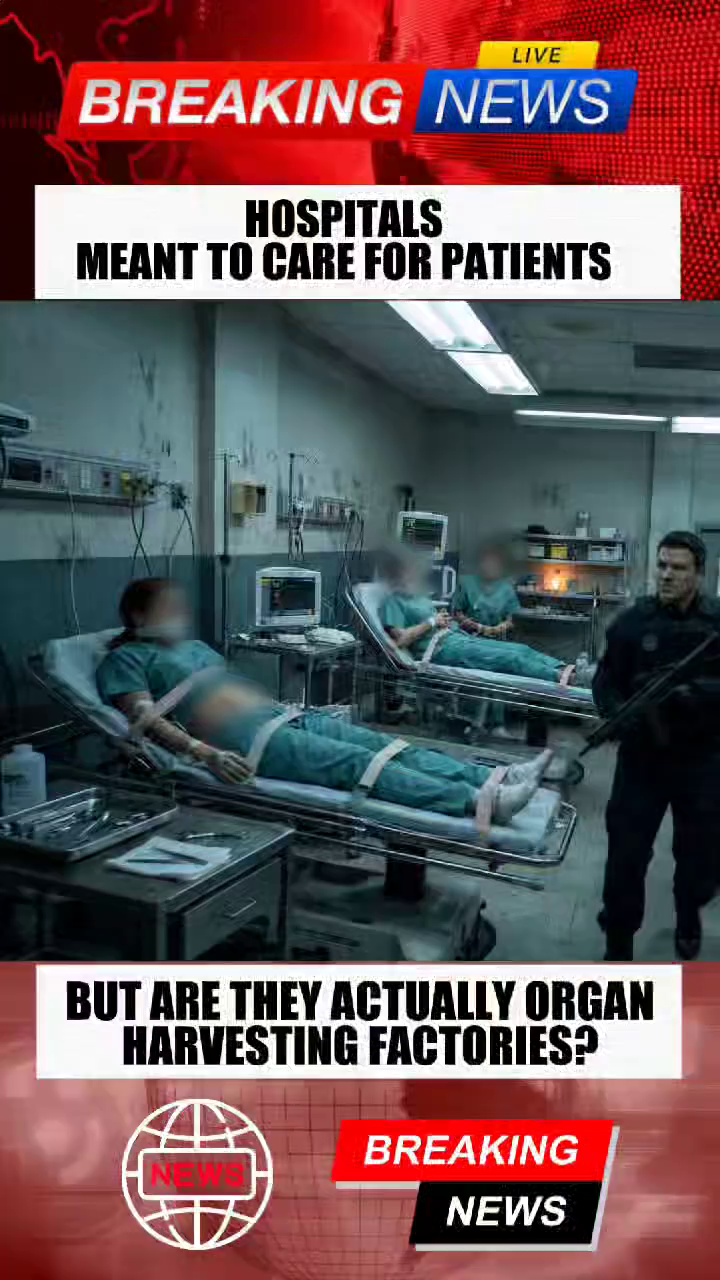
A series of anonymous tips, leaked internal documents, and a quietly launched police investigation began to suggest something almost unimaginable: that the hospital’s most powerful doctor may have been at the center of a secret and highly organized organ harvesting network.
If the allegations prove true, the scandal could become one of the darkest chapters in modern medical history.
The First Cracks in the Facade
The first warning sign came not from law enforcement, but from within the hospital itself.
A junior surgical nurse, whose identity remains protected, noticed something deeply unsettling. Patients who were not registered organ donors—many of them poor, homeless, or undocumented—were being fast-tracked into critical care surgery after relatively minor injuries. In several cases, these patients died unexpectedly on the operating table, often under circumstances that were medically difficult to explain.
More troubling still, their bodies were sometimes transferred quickly to private mortuaries, bypassing standard autopsy procedures.
“I started seeing patterns that didn’t make sense,” the nurse later told investigators. “Organs were being removed far more often than was justified. And the paperwork was always perfect—too perfect.”
When she quietly raised concerns, she was told to “focus on her duties” and stop asking questions.
That response, she said, convinced her that something was very wrong.
The Hidden Paper Trail
As whispers began to circulate among staff, a small group of hospital administrators initiated an internal audit of the transplant department. What they found was alarming.
Organ donation forms had been altered. Consent signatures were missing, copied, or added after death. In some cases, patients who had explicitly declined to be donors were still listed as having authorized full organ recovery.
Even more suspicious was the financial trail. Several private transplant brokers—companies that matched wealthy recipients with donors overseas—had been paying large “consulting fees” to shell corporations linked to individuals close to Dr. Kovač.
While none of these payments were illegal on their own, the pattern suggested a system of profit-sharing that had no place in a public hospital.
By the time these findings were escalated, the hospital’s legal team quietly contacted national authorities.
A criminal investigation was opened under strict secrecy.
A Doctor with Absolute Power
To understand how such a scheme could exist, investigators turned their attention to Dr. Kovač himself.
As Head of Surgery, he had enormous authority. He controlled operating room schedules, assigned transplant eligibility, approved emergency procedures, and signed off on death certificates in complicated cases. He was, in many ways, the ultimate gatekeeper between life and death.
Colleagues described him as brilliant but intimidating.
“He was untouchable,” one senior surgeon said. “If you disagreed with him, your career stalled. If you supported him, you advanced.”
This culture of fear and loyalty may have allowed a criminal enterprise to grow undetected for years.
How the Alleged Network Worked
According to investigators, the suspected organ harvesting network followed a chillingly efficient process.
Vulnerable patients—those without family, legal advocates, or stable housing—were identified in emergency rooms or trauma wards. Once admitted, their treatment paths were quietly altered. Complications were exaggerated. Aggressive procedures were recommended.
If a patient died, or was declared brain-dead under questionable circumstances, their organs were quickly harvested. These organs were then sold, through intermediaries, to wealthy recipients in foreign countries where transplant waiting lists were long and regulation was weak.
The profits, investigators believe, were laundered through consulting firms, offshore accounts, and medical equipment suppliers.
In effect, human lives had become inventory.
Families Left in the Dark
Perhaps the most heartbreaking aspect of the case lies with the families of the deceased.
Several relatives have now come forward saying they were never informed about organ donations, or that they only learned their loved ones’ organs were missing weeks later, during burial preparations or private autopsies.
One woman described how her brother, a construction worker injured in a fall, was declared dead after a routine surgery.
“They told us it was a complication,” she said. “But when we later asked for his medical records, half of them were gone. And his organs were gone too.”
For families like hers, the investigation is not just about justice—it is about knowing the truth of what happened to those they loved.
The Hospital Responds
Saint Aurelius Medical Center has placed Dr. Kovač on indefinite administrative leave. In a statement, the hospital said it is “fully cooperating with authorities” and is “committed to transparency, accountability, and patient safety.”
However, critics argue the institution bears some responsibility for allowing such a system to exist.
“When you give one person too much unchecked power in a hospital,” said a medical ethics expert, “you create the conditions for abuse. This case is a horrifying example of what can happen.”
A Global Problem
While this story is fictional, the issue it explores is not entirely imaginary.
The illegal organ trade is a real, multi-billion-dollar global industry. According to international health organizations, thousands of organs are trafficked every year, often taken from the poor and sold to the rich. Weak oversight, corruption, and desperate patients create fertile ground for exploitation.
Hospitals, doctors, and brokers who cross ethical lines can become part of this underground economy—sometimes without the public ever knowing.
What Happens Next?
In the fictional world of this story, prosecutors are now reviewing thousands of medical files, financial transactions, and internal communications. If enough evidence is found, Dr. Kovač and several associates could face charges ranging from fraud and conspiracy to murder and human trafficking.
For the hospital staff who tried to speak up, the investigation offers both hope and fear—hope that the truth will finally be known, and fear of what it may reveal.
And for the families, it is a painful reminder that even the places meant to save lives can, under the wrong leadership, become something far darker.