The Everyday Design Detail Most People Never Question
Almost everyone has owned a bath towel. Almost no one has questioned it.
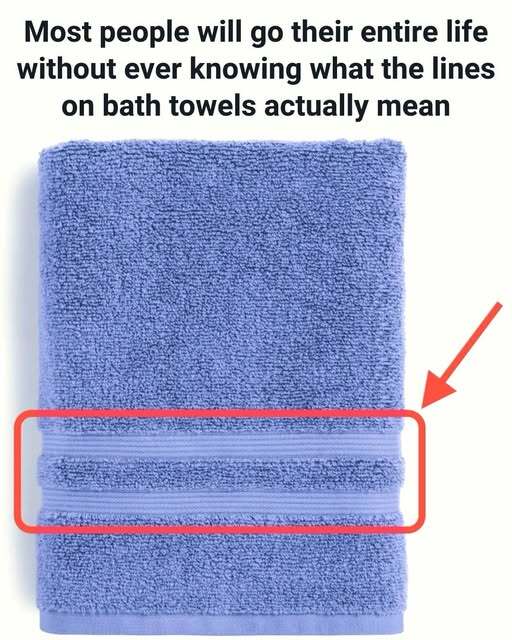
That smooth horizontal strip near each end—the one that looks different from the fluffy terry cloth around it—is so familiar that it disappears into the background of daily life. It’s there on hotel towels, gym towels, beach towels, and luxury bath sets. Yet most people go their entire lives without knowing why it exists.
It isn’t decoration.
It isn’t a mistake.
And it definitely isn’t useless.
That simple band is one of the most practical, intentional design features in modern textiles—and once you understand it, you’ll never look at towels the same way again.
First Things First: What Is That Strip?
That horizontal line is called a dobby border or woven border. Unlike the rest of the towel, which is made of looped cotton fibers (known as terry cloth), this section is woven flat and tightly.
This change in weaving isn’t accidental. It’s engineered.
To understand why it exists, you have to understand how towels work—and how they fail.
Towels Live a Hard Life
Bath towels endure more stress than most household fabrics. Think about it:
- They’re soaked repeatedly
- Twisted, pulled, and wrapped around bodies
- Washed and dried at high heat
- Rubbed against skin, hair, and surfaces
- Hung while wet, then dried again
Over time, all of that takes a toll. The fluffy loops that make towels absorbent are also what make them vulnerable. They can stretch, unravel, and distort if not properly reinforced.
That’s where the dobby border comes in.
1. Structural Reinforcement: The Towel’s Backbone
The woven strip acts like a stabilizing spine. Because it’s tightly woven and flat, it provides strength where towels need it most—near the edges.
Without this reinforcement:
- Towels would stretch unevenly
- Edges would curl or ripple
- Fabric would fray faster
- The towel would lose its shape
This is why very cheap towels often look misshapen after a few washes. They either lack a proper border or use a poorly constructed one.
The dobby border distributes tension evenly, preventing the towel from pulling itself apart over time.
2. Shrinkage Control: Keeping Towels Looking Like Towels
Cotton shrinks. That’s a fact of life.
But cotton shrinks differently depending on how it’s woven. Terry cloth and flat-woven fabric behave differently in heat and moisture. By adding a woven strip, manufacturers can control how the towel shrinks, ensuring it stays rectangular instead of becoming warped or trapezoidal.
That border:
- Anchors the towel’s dimensions
- Prevents uneven contraction
- Maintains clean, straight edges
This is why well-made towels still look neat years later, while cheaper ones twist and bunch unpredictably.
3. Protecting Absorbency Without Sacrificing Durability
The loops in terry cloth are what absorb water—but they’re also fragile. At the ends of a towel, loops are more likely to snag, stretch, or unravel.
The dobby border creates a transition zone:
- It stops loops from unraveling at the edges
- It protects the absorbent body of the towel
- It ensures durability without reducing absorbency
Importantly, this border is not meant to absorb water. Its job is to support the parts that do.
Think of it as the frame around a canvas—it doesn’t replace the art, but without it, the art wouldn’t last.
4. Folding, Hanging, and Everyday Practicality
That line also serves a surprisingly simple purpose: usability.
The border:
- Makes towels easier to fold evenly
- Helps them hang straight on racks
- Creates visual symmetry
Hotels rely on this feature heavily. Uniform folds and consistent presentation aren’t just about aesthetics—they signal cleanliness, order, and quality.
Ever wonder why hotel towels always look “crisp”? That border plays a big role.
5. Manufacturing Precision and Quality Control
In textile manufacturing, consistency matters. The dobby border helps machines:
- Maintain tension during weaving
- Align fibers correctly
- Reduce production defects
It also serves as a visual indicator of craftsmanship. A well-executed border often signals a higher-quality towel, while poorly stitched or uneven borders suggest shortcuts in manufacturing.
In other words, that strip is a quiet quality check.
6. How Function Became Design
Over time, manufacturers realized that since the border already existed, it could also serve an aesthetic purpose.
So they began:
- Adding subtle patterns
- Weaving brand identifiers
- Using color contrast or texture
But this came after function—not before it. The border was never created to look nice. It was created to work.
Design simply followed practicality.
7. Why Every Towel Has One (But You Never Noticed)
Good design disappears.
When something works well, we stop noticing it. The dobby border does its job so effectively that it blends into the background of daily life. It doesn’t ask for attention. It just quietly ensures that your towel:
- Lasts longer
- Looks better
- Feels more reliable
That’s why most people never question it—until someone points it out.
8. A Lesson in Everyday Engineering
This tiny towel detail is a perfect example of thoughtful engineering hidden in plain sight. No marketing campaign. No explanation tag. Just a practical solution refined over decades.
It reminds us that many objects we use daily are the result of careful problem-solving—even when they seem simple.
From door hinges to shoelaces to bath towels, the world is full of quiet design choices that make life smoother without demanding credit.
The Real Meaning of That Line
So what does that line really mean?
It means:
- Strength without bulk
- Durability without stiffness
- Function without fuss
It’s there because towels would fail faster without it.
And now that you know, you’ll probably notice it every time you fold laundry—and maybe appreciate it just a little more.
Because sometimes, the most interesting things are the ones we’ve always overlooked.