Public opinion in the United States is never static. It shifts with economic conditions, world events, leadership decisions, and personal experiences. Recent national polling suggests that some Americans may be reassessing how they compare the presidency of Joe Biden with that of Donald Trump. While partisan loyalties remain strong, several surveys indicate movement among independents and soft partisans — groups that often decide close elections and shape the political mood heading into midterms.
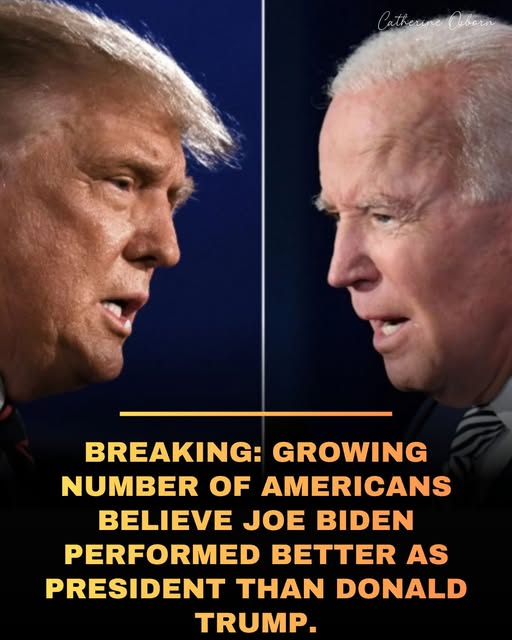
A key data point comes from the Harvard CAPS-Harris Poll, which has tracked voter sentiment on leadership, policy priorities, and economic perceptions. Its January wave found a narrow majority of respondents saying Trump is faring worse than Biden did in office, a reversal from a late-2025 reading that leaned the other way. Interpreting poll swings requires caution — margins of error, question wording, and timing matter — but the direction of change has drawn attention from analysts.
Economics appears central to the shift. Voters consistently rank the economy as their top concern, and perceptions often outweigh technical indicators. Even when macro data show mixed signals, household experiences with prices, wages, and borrowing costs can shape opinions more powerfully. In the Harvard-Harris findings, a notable share of respondents said they view the economy as worse now, citing inflation and cost-of-living pressures. Whether those perceptions are tied to global factors, domestic policy, or both, they influence how voters evaluate leadership.
Other surveys tell a similar story about public mood. The Pew Research Center has reported lower job approval for Trump in recent readings and a sizable group saying current conditions fall short of expectations. Meanwhile, Yahoo/YouGov polling has found an uptick in respondents who feel the country is moving in the wrong direction. The The New York Times/Siena College partnership has also shown a large share of voters saying the country is worse off than a year ago — a sentiment that can weigh on any incumbent.
Still, the political landscape remains polarized. Democrats overwhelmingly rate Biden’s tenure more favorably, highlighting pandemic management, infrastructure spending, and alliances abroad. Republicans continue to credit Trump for tax policy, deregulation, and a focus on border enforcement and energy. These core views tend to be stable. The most consequential movement often occurs among independents, suburban voters, and younger cohorts who can shift between cycles.
Analysts note that expectations play a powerful role. When voters anticipate rapid change — on prices, immigration, or public safety — and results feel slower or mixed, disappointment can surface. That doesn’t always translate into durable opposition, but it can soften support and increase openness to alternatives. Conversely, positive developments or clear policy wins can reverse trends quickly. Polls are snapshots, not forecasts.
Media narratives also shape perception. High-visibility stories about prices, strikes, international conflicts, or legislative battles can color how people feel about leadership. Social media amplifies these narratives, sometimes accelerating opinion swings. Campaigns and parties try to frame these moments to their advantage, emphasizing favorable indicators and contextualizing unfavorable ones.
Another factor is comparative evaluation. Voters often judge current leadership against recent memory. When asked to compare presidencies directly, respondents may weigh different criteria: economic comfort, stability, foreign policy posture, or cultural climate. A “better/worse” comparison can reflect personal priorities as much as objective measures.
Methodology matters, too. Pollsters differ in sampling techniques (online panels vs. live calls), likely-voter screens, and question phrasing. A one-point change within a margin of error may not be meaningful; a consistent pattern across multiple polls over time is more informative. That’s why trend lines — not single headlines — are what professionals watch.
Looking ahead, the implications for upcoming elections depend on whether these attitudes persist. If economic perceptions improve, incumbent support can rebound. If dissatisfaction lingers, challengers may gain traction. Turnout, candidate quality, and local issues will also play major roles. Midterms, in particular, can function as referenda on current leadership while also being shaped by district-level dynamics.
It’s also worth remembering that public opinion is multidimensional. A voter might prefer one leader on the economy and another on foreign policy, or approve of certain policies while disliking the overall direction. Surveys that probe issue-by-issue often reveal more nuance than topline approval alone.
For citizens, polls can inform but shouldn’t replace engagement. Voting, community involvement, and staying informed across sources help ensure that preferences are reflected beyond survey responses. For policymakers, the message from recent polls is that economic confidence remains a decisive driver of approval.
In the end, these numbers highlight a familiar truth in American politics: sentiment can change, sometimes quickly, when daily realities shift. Whether the current trend continues or reverses will depend on economic conditions, policy outcomes, and how effectively leaders communicate their plans. For now, the data suggest a country still debating its recent past while weighing its near future — and watching closely as the next chapter unfolds.