Surge in the Golden State: Why Steve Hilton’s Rise Could Upend California Politics
California politics may be heading into one of its most unpredictable and consequential election cycles in decades. In a state long dominated by Democrats at the statewide level, a new narrative is emerging among conservative voters: the possibility that outsider energy, voter frustration, and California’s unique election rules could combine to reshape the 2026 governor’s race.
At the center of this conversation is Steve Hilton — a media personality, policy commentator, and longtime critic of California’s political establishment. Among his supporters, there is growing excitement and a belief that he is gaining serious momentum in the early stages of the race. Whether that momentum translates into votes remains to be seen, but the buzz itself reveals something important about the current mood of many California voters.
A Wide-Open Field
Unlike races with a clear incumbent advantage, the upcoming governor’s contest is shaping up as a wide-open primary. That alone changes the dynamics. When there is no sitting governor seeking reelection, voters often feel freer to consider alternatives, and lesser-known or outsider candidates can gain traction more quickly.
Hilton’s appeal to his base rests on a simple message: California, in their view, has lost its way and needs a dramatic course correction. His supporters argue that rising living costs, housing affordability struggles, public safety concerns, and business flight from the state have left many residents frustrated and looking for change.
In that environment, a candidate who positions himself as a disruptor — rather than a traditional Sacramento insider — can attract attention.
The Top-Two Wild Card
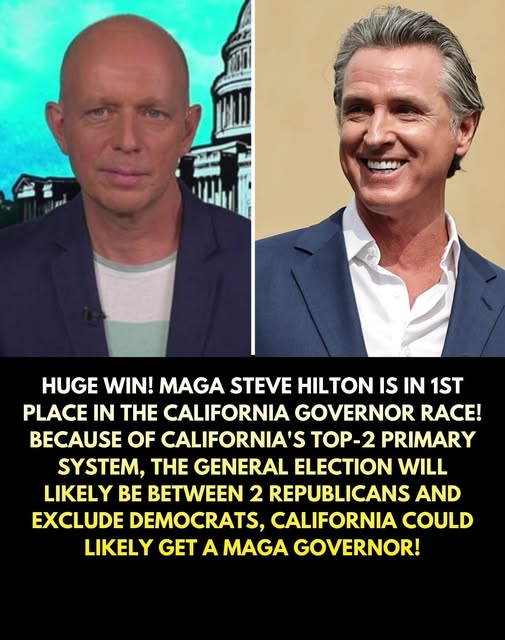
California’s “top-two” primary system adds another twist. All candidates, regardless of party, appear on the same primary ballot. The two candidates with the most votes advance to the general election, even if they are from the same party.
This system has produced surprises before, and it opens the door to unusual scenarios. In theory, if the Democratic vote were split among multiple prominent candidates while Republican voters coalesce around one or two figures, it could lead to a general election matchup that excludes Democrats entirely.
That possibility energizes many conservatives, who see it as a rare structural opportunity in a state where Republicans have struggled statewide in recent years. Even the chance of a Republican-versus-Republican general election is enough to galvanize donors, activists, and voters who feel sidelined in California politics.
The Anti-Establishment Mood
Hilton’s message resonates most with voters who believe California’s leadership has been ineffective or out of touch. His rhetoric often emphasizes economic opportunity, deregulation, school choice, and a more aggressive approach to crime and homelessness.
Supporters frame the election as a referendum on the direction of the state over the past decade. They argue that one-party dominance has reduced accountability and that competitive pressure is needed to force better governance.
This anti-establishment sentiment is not unique to California. Across the country, voters in both parties have shown a willingness to back candidates who promise to challenge the political status quo. In California, however, that energy faces the reality of a heavily Democratic electorate, especially in statewide races.
The Democratic Counterweight
Of course, Democrats remain a powerful force in California. The state’s voter registration numbers still favor them, and major urban areas tend to lean strongly blue. Any Republican path to the governor’s mansion would require not only strong GOP turnout but also meaningful support from independents and moderate Democrats.
Democratic candidates will likely argue that their policies protect workers, expand social programs, and address inequality in ways Republicans would not. They may also portray conservative challengers as out of step with California’s values on issues like climate policy, immigration, and social issues.
In other words, even if conservatives feel energized, the structural and demographic realities of California politics still present a steep climb.
Media, Messaging, and Momentum
Hilton’s background in media gives him a platform many candidates lack. He understands how to frame arguments, generate attention, and speak directly to viewers and voters. In modern campaigns, that can be a significant advantage.
Name recognition, however, cuts both ways. High visibility can attract supporters, but it also invites scrutiny. As the race develops, voters will likely look beyond rhetoric and ask detailed questions about policy plans, leadership style, and governing experience.
Momentum in early conversations does not always translate into victory on election day. California’s size, diversity, and regional differences make statewide campaigns especially complex.
A Symbolic Race
Even beyond who ultimately wins, this race could become symbolically important. For conservatives, a strong showing would signal that their message still has life in deep-blue states. For Democrats, holding the governorship would reinforce their dominance in California politics.
For many voters, the election may come down less to party labels and more to practical concerns: cost of living, quality of life, public safety, and economic opportunity. Candidates who connect their vision to those everyday issues often have the greatest appeal.
The Bottom Line
Is California on the verge of a political earthquake? It’s too early to say. But the fact that such a question is even being asked shows that some voters are restless and open to alternatives.
Steve Hilton’s supporters see a once-in-a-generation opportunity to change the direction of the state. His critics see a media figure riding a wave of dissatisfaction without offering realistic solutions. The truth will be tested not in headlines or social media posts, but in the voting booth.
One thing is certain: if the race remains competitive and unpredictable, Californians across the political spectrum will be paying close attention. And in a state known for setting national trends, what happens here could echo far beyond its borders.