✔️ What it means, why it matters, and what happens next
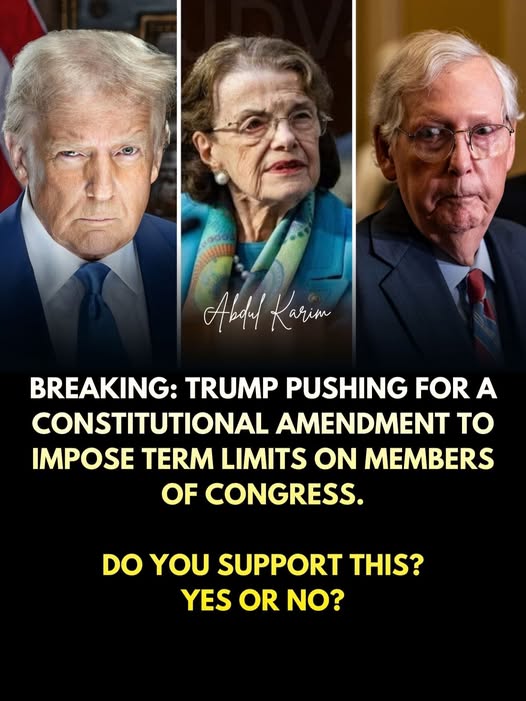
A renewed push to impose term limits on members of the U.S. Congress is once again stirring debate across the political landscape. The idea itself is not new — Americans have discussed, polled, and argued over congressional term limits for decades — but the topic tends to resurface whenever public frustration with Washington reaches a boiling point. Now, with reports of a proposal being pushed to amend the Constitution to limit how long senators and representatives can serve, the conversation is back in the spotlight.
Supporters say term limits could fundamentally change how Congress works, reducing the influence of career politicians and opening the door to new voices. Critics warn that such a change could weaken the legislative branch, empower lobbyists and unelected staff, and deprive the country of experienced lawmakers. And hovering over all of it is a simple but daunting reality: amending the U.S. Constitution is extremely difficult by design.
So what’s really at stake? And how realistic is this proposal?
The Case for Term Limits
Advocates of congressional term limits often start with a straightforward argument: power should not stay in the same hands for too long. In their view, lengthy tenures can lead to entrenched political networks, cozy relationships with donors and lobbyists, and a disconnect from everyday voters.
Many supporters believe term limits would:
1. Reduce “career politicians.”
Some lawmakers serve for decades, building long careers in Washington. Pro–term limit voices argue that Congress was never meant to be a lifelong profession, but rather a period of public service before returning to private life.
2. Encourage fresh ideas.
Regular turnover could bring in people with new perspectives, professional backgrounds, and policy ideas. This, supporters say, might make Congress more dynamic and innovative.
3. Limit entrenched power.
Long-serving members often accumulate seniority, which translates into leadership roles and committee chairmanships. Term limits could disrupt these hierarchies and redistribute influence.
4. Increase public trust.
Polls over the years have frequently shown that term limits are popular with voters. Backers argue that passing them could restore some faith in government institutions.
From this angle, term limits are framed as a structural reform — a reset button for a system some see as stuck.
The Case Against Term Limits
Opponents, however, see serious downsides.
1. Experience matters.
Lawmaking is complex. Crafting budgets, negotiating international agreements, and overseeing federal agencies require deep knowledge. Critics argue that forcing out experienced legislators could weaken Congress’s ability to govern effectively.
2. Voters already have term limits.
Elections happen every two years for the House and every six for the Senate. If constituents want someone out, they can vote them out. From this perspective, mandatory limits interfere with voter choice.
3. More power to lobbyists and staff.
Some political scientists warn that inexperienced lawmakers may rely more heavily on lobbyists, bureaucrats, and long-time staffers for expertise. Ironically, this could shift influence away from elected officials to unelected actors.
4. Loss of institutional memory.
Understanding how and why past policies were created can be crucial. High turnover might lead to repeated mistakes or short-term thinking.
Critics often argue that the real issues in Washington — polarization, campaign finance, or gridlock — would not automatically be solved by term limits.
The Constitutional Hurdle
Even if public support is strong, turning term limits into reality is another story.
Amending the U.S. Constitution is intentionally difficult. There are two main paths:
- Congressional proposal: Two-thirds of both the House and Senate must approve an amendment.
- Convention of states: Two-thirds of state legislatures can call for a constitutional convention.
After that, three-fourths of the states (38 out of 50) must ratify the amendment.
This high bar ensures that only proposals with broad, bipartisan, and nationwide support become part of the Constitution. Historically, amendments are rare — only 27 have been ratified since 1789.
In other words, even a popular idea faces a steep climb.
A Question of Balance
At its core, the term limits debate is about balance:
- Fresh leadership vs. experienced governance
- Structural reform vs. voter choice
- Long-term stability vs. regular renewal
Some reform advocates suggest compromise models, such as long but finite limits (for example, 12–18 years total service), aiming to preserve experience while preventing indefinite careers.
Others argue that improving transparency, campaign finance rules, or primary election systems might address public concerns without changing the Constitution.
Why This Debate Keeps Returning
The persistence of the term limits conversation says something about public sentiment. Many Americans feel disconnected from Washington and skeptical of political institutions. Proposals like this tap into a desire for accountability and change.
At the same time, the U.S. system was built to value stability and gradual reform. The founders designed the amendment process to slow down dramatic shifts, ensuring they reflect broad consensus rather than momentary frustration.
What Happens Next?
For now, a proposal being “pushed” is only the first step in a very long process. Whether it gains traction depends on political will, bipartisan cooperation, and support at the state level.
Realistically, constitutional amendments take years, not months. Public debate, legal analysis, and political negotiation would all play roles before any vote by the states.
The Bigger Picture
Regardless of where one stands, the discussion itself highlights a healthy feature of democracy: the ability to question how the system works and consider reforms. Term limits may or may not be the answer, but the debate forces a broader reflection on representation, accountability, and trust in government.
In the end, the question is less about a single proposal and more about what kind of Congress — and what kind of democracy — Americans want going forward.